
How To Get PR In USA: What You Need to Know Before Choosing a US Immigration Lawyer
The U.S. Immigration Pathways That May Lead to Permanent Residence
What are the steps to obtain permanent residence in the USA?
That question sounds simple until you start looking at the number of immigration categories, eligibility rules, petitions, documents, and procedural steps involved. There is no single application that every person can use to become a US permanent resident.
If you are researching a us immigration lawyer, the first thing to know is that your route depends on your circumstances. Family relationships, employment, education, immigration history, investment, humanitarian circumstances, and other factors may affect which category is available to you.
For someone in Edmonton, the fact that you live in Canada does not by itself create a route to US permanent residence. You need to identify a qualifying US immigration category first.
So, How To Get PR In USA starts with a more important question: Which immigration pathway may actually apply to you?
Here is where things can get complicated.
What Does It Mean to Get Permanent Residence in the USA?
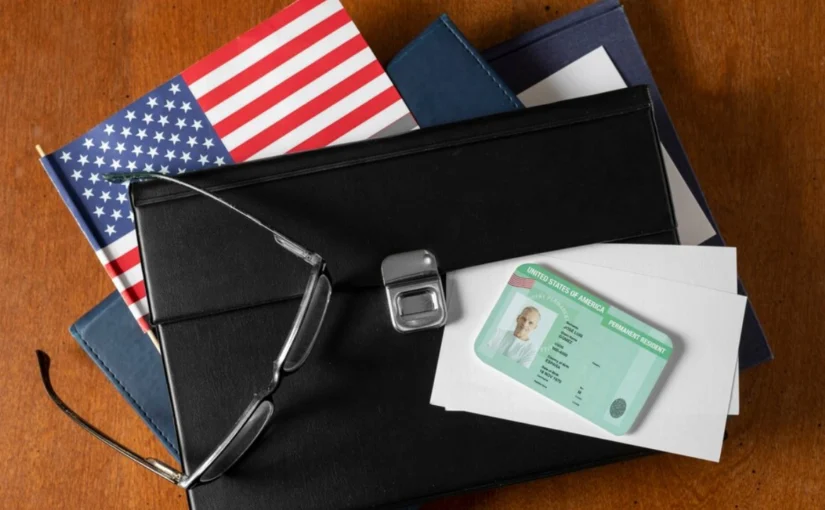
US permanent residence generally refers to lawful permanent resident status, commonly represented by a Green Card.
A Green Card allows a person to live and work in the United States on a permanent basis, subject to US immigration law and the conditions that apply to permanent residents.
Permanent residency is different from temporary immigration status.
For example, a person may enter the United States temporarily for:
- Tourism
- Study
- Certain types of employment
- Business activities
- Other temporary purposes
Temporary status does not automatically become permanent residence.
A Green Card is also not the same as US citizenship. A permanent resident remains a permanent resident unless their status changes or is lost under applicable laws.
The route to permanent residence depends on the immigration category available to the applicant. Some routes involve a family member. Others may involve employment, investment, humanitarian circumstances, or statutory programs.
That is why copying another applicant’s process can create problems.
Your friend’s immigration route may have nothing to do with yours.
7 Main Ways People May Qualify for US Permanent Residence
There are several immigration categories that can potentially lead to permanent residence. However, not every category applies to every person.
Before assuming that one of these routes is available to you, review the eligibility requirements that apply to each category.
1. Family-Based Immigration
Family relationships can create an immigration pathway for qualifying relatives of US citizens or lawful permanent residents.
The rules depend on the relationship involved and the immigration category.
A spouse, parent, child, or other qualifying relative may fall under different rules. Some family relationships can be subject to annual numerical limits and visa availability.
This situation is where many applicants make a costly mistake: they assume that having a relative in the United States automatically means they can receive a Green Card.
It does not.
The exact relationship, the status of the family member in the United States, the applicant’s circumstances, and other legal requirements can all matter.
2. Employment-Based Immigration
Employment can provide another route for qualifying applicants.
US employment-based immigration includes multiple categories, and requirements vary between them. Factors may include the applicant’s qualifications, proposed employment, employer involvement, and the immigration category being used.
Some employment-based routes involve a US employer petition. Others have different requirements.
If you are considering employment as part of How To Get PR In USA, do not assume that simply receiving a US job offer automatically creates permanent residence eligibility.
The immigration category has to support the application.
3. Immediate Relative Categories
Certain close family relationships to US citizens are treated differently from family preference categories.
Immediate relative categories can include qualifying spouses, unmarried children under specified conditions, and parents of US citizens when the applicable requirements are met.
The distinction matters because different family categories can have different visa-number rules and procedures.
A person researching family immigration should therefore identify the exact relationship rather than simply searching for “family Green Card.”
4. Diversity Visa Program
The Diversity Visa Program provides an immigration pathway for people who meet the program’s requirements and are selected through the applicable process.
Eligibility can depend on factors such as the qualifying country of chargeability and education or work requirements.
Program rules and availability can change, so applicants should check current government information before relying on older articles, videos, or social media posts.
Eligibility to enter the program differs from being selected and successfully completing the immigration process.
5. Investment-Based Immigration
Investment-based immigration may provide a route to permanent residence for qualifying investors who meet the requirements of the applicable US program.
These cases can involve financial requirements, qualifying investments, job-creation rules, documentation, and other legal conditions.
This is not simply a matter of putting money into a US business and receiving a Green Card.
The source of funds, structure of the investment, qualifying requirements, and supporting evidence can all matter.
6. Humanitarian or Special Immigration Categories
US immigration law contains certain humanitarian and statutory categories that may provide immigration pathways for qualifying individuals.
These categories can involve very specific circumstances and eligibility requirements.
Applicants should avoid assuming that a general description they read online applies to their situation. The legal basis for each category matters.
7. Other Immigration Categories
There are additional US immigration categories that may apply depending on an applicant’s circumstances.
Some routes involve specific occupations, relationships, statutory programs, or other qualifying circumstances.
This is why the question “How To Get PR In USA” cannot be answered with one universal checklist.
The route comes first. The paperwork follows.
The Biggest Mistake? Choosing an Immigration Route Before Checking Eligibility
The internet makes it easy to find immigration pathways.
It also makes it simple to choose the wrong one.
Before deciding which application to file, consider factors such as:
- Your family relationships
- Your employment history
- Your education and qualifications
- Your current immigration status
- Your previous US immigration history
- Your country of birth or nationality, where relevant
- Financial circumstances where applicable
- Previous immigration violations
- Criminal or inadmissibility concerns
- Sponsorship or petitioner requirements
One overlooked detail can change how an application is handled.
For example, an applicant may focus on a family relationship while overlooking an issue from a previous US immigration matter. Another applicant may assume their employment qualifies them for a particular category without checking the category’s actual requirements.
This is why a us immigration lawyer may first review your circumstances rather than immediately discussing forms.
The route you choose matters.
9 Common Mistakes That Can Complicate a US Immigration Application
1. Choosing the Wrong Immigration Category
An applicant may select a route because someone they know used it.
That does not mean the same category applies to them. Each immigration category has its requirements.
2. Assuming a Relative Automatically Qualifies Them
Having a US citizen or permanent resident relative can be important, but the relationship alone does not guarantee eligibility.
The exact family relationship and applicable category need to be reviewed.
3. Submitting Incomplete Information
Leaving out information can create questions during processing.
If a form asks for a particular history or detail, do not guess or simply skip it because you think it is unimportant.
4. Providing Inconsistent Information
Dates, addresses, employment history, names, and other information should be checked carefully.
A discrepancy does not automatically mean an application will fail, but unexplained differences can create additional questions.
5. Ignoring Supporting-Document Requirements
Forms are only one part of many immigration filings.
The supporting evidence can help establish whether the applicant meets the requirements of the selected category.
6. Missing Deadlines
Immigration cases can involve notices, response periods, appointments, and other deadlines.
Ignoring a notice can create serious procedural problems.
7. Relying on Outdated Online Information
Immigration rules can change.
A social media post from several years ago may not reflect current requirements. Check current government information before relying on something you found online.
8. Assuming Another Person’s Route Will Work for You
Two applicants can have similar goals but entirely different immigration options.
Your family, work, immigration, and personal history can change which categories are available.
9. Failing to Address Previous Immigration or Legal Issues
Previous overstays, immigration violations, removals, criminal matters, or other issues may affect eligibility or admissibility.
If something exists in your history, hiding it from your legal adviser is not a solution.
What Documents May Be Needed?
There is no universal document package for every US permanent residence case.
The documents you need depend on the immigration category and your circumstances.
Depending on the case, documentation may include:
- Passport and identity documents
- Birth certificates
- Marriage certificates or other family relationship records
- Employment records
- Educational records
- Financial documents
- Previous immigration records
- Evidence connected to the selected immigration category
- Required immigration forms
- Government notices and correspondence
Some documents may also need translation when they are not in English, depending on the applicable requirements.
Before submitting anything, check the document rules for your specific category.
A document checklist copied from another person’s case may leave out something relevant to yours.
Why Immigration Forms Can Become a Problem?
A small inconsistency may look harmless to the applicant, but immigration paperwork is not the place to guess.
Forms can ask about:
- Previous addresses
- Employment history
- Travel
- Family relationships
- Immigration history
- Names and aliases
- Previous applications
- Dates and locations
- Other personal circumstances
One common issue is inconsistent dates.
For example, if an applicant lists one employment date on one form and another date elsewhere, they may need to explain the difference.
Name differences can also require attention, particularly when passports, birth records, marriage records, or other documents use different versions of a name.
The same applies to address history and previous immigration information.
If you are unsure how a question applies to your situation, do not invent an answer simply to complete the form.
How a US Immigration Lawyer Can Help?
An USimmigration lawyer can help you examine the legal and procedural side of a potential immigration case.
Depending on the circumstances, legal assistance may include:
- Reviewing potentially relevant immigration categories
- Examining eligibility factors
- Reviewing forms and supporting documents
- Explaining procedural requirements
- Identifying potential concerns in an immigration history
- Reviewing government correspondence
- Preparing or reviewing an immigration filing
- Discussing possible next steps when complications arise
The role is not to promise an immigration result.
Instead, legal advice can help you identify the issues that need attention before you submit an application.
If your case involves unusual circumstances, prior immigration problems, or uncertainty about which category applies, speaking with a us immigration lawyer before filing may be worth considering.
Applying for US Permanent Residence From Edmonton: What Should You Know?
If you live in Edmonton and are researching US immigration, one fact is particularly important:
Canadian residence does not automatically create US permanent residence eligibility.
Living in Canada and qualifying under US immigration law are separate issues.
You may be researching US immigration because of family in the United States, a potential employment opportunity, business plans, or another personal circumstance.
Whatever the reason, start by identifying the US immigration category that could apply.
For Edmonton applicants, the process may also raise practical questions about where certain steps take place and which procedure applies to a person residing in Canada.
Do not assume that a Canadian immigration process can simply be transferred to the United States.
US immigration law has its own categories, requirements, forms, and procedures.
A us immigration lawyer in Edmonton can discuss the US immigration issues relevant to your circumstances and explain what questions should be reviewed before you proceed.
What Happens After You Choose an Immigration Pathway?
There is no single process that applies to every US permanent residence case.
However, many cases involve several broad stages:
1. Determine Eligibility
Start by identifying the immigration category and checking whether you appear to meet its requirements.
2. Identify the Appropriate Category
Do not move directly to forms until you know which legal pathway you are pursuing.
3. Gather Supporting Documentation
Collect the records needed to support the applicable requirements.
4. Prepare the Required Forms
Complete the forms carefully and ensure that the information is consistent with your supporting records.
5. Submit the Application or Petition
The filing procedure depends on the immigration category and the circumstances of the case.
6. Respond to Notices or Requests
Some cases may involve additional requests, notices, or procedural steps.
7. Complete Required Procedures
Depending on the category, applicants may need to complete interviews, medical examinations, biometrics, or other procedures.
8. Wait for the Applicable Decision or Next Step
Processing periods vary. They can depend on the immigration category, visa availability, government workload, and individual circumstances.
This variability is another reason not to rely on a single timeline found online.
6 Questions You Should Ask Before Starting a US Immigration Application
1. Which US immigration category may apply to me?
Start here. Your potential pathway affects almost everything that follows.
2. Do I meet the eligibility requirements?
Having a family member, job, degree, or financial resources does not automatically mean that you qualify.
3. What documents will I need?
Find out what evidence applies to your category before preparing the filing.
4. Are there issues in my previous immigration history?
Review prior applications, entries, overstays, refusals, removals, or other immigration matters where relevant.
5. Do I need a sponsor or petitioner?
Some immigration categories involve another person or organization. Others have different filing structures.
6. Should I speak with a us immigration lawyer before filing?
If your case is straightforward, you may still want to understand the requirements yourself. If there are questions about eligibility, previous immigration history, inadmissibility, family relationships, or another complicated issue, legal advice can help you identify what needs attention.
FAQs About US Permanent Residence
Can a Canadian living in Edmonton get permanent residence in the USA?
Potentially, yes, if the person qualifies under a US immigration category. Simply living in Canada does not make someone eligible for permanent residence in the USA. The applicable US immigration pathway and the person’s circumstances determine whether permanent residence may be available.
What is the easiest way to get a Green Card?
There is no single route that is the easiest for everyone. The appropriate pathway depends on factors such as family relationships, employment, qualifications, immigration history, and other circumstances.
Can a family member sponsor me for US permanent residence?
A qualifying family relationship may create a pathway under US immigration law. However, the specific family relationship, the status of the petitioner, the availability of visas where applicable, and other requirements can all impact the case.
Can I get US permanent residence through employment?
Employment can be the basis for certain immigration categories. Requirements vary depending on the category, the position, the employer, and the applicant’s qualifications.
How long does it take to get a Green Card?
There is no single timeline for all applicants. Processing can vary according to the immigration category, visa availability, government processing, and individual circumstances.
Do I need a us immigration lawyer?
Not every applicant has the same need for legal assistance. A us immigration lawyer may be useful when the applicable category is unclear, the case involves previous immigration issues, or the paperwork and eligibility questions are difficult to assess.
Can I apply for US permanent residence while living in Canada?
Some immigration categories allow applicants residing outside the United States to pursue permanent residence through the applicable process. The procedure depends on the category and the applicant’s circumstances.
What happens if my US immigration application is refused?
The next step depends on the type of application, the reason for the decision, and the immigration rules that apply. In some situations, there may be another filing, a motion, an appeal, or another procedural option. There is no single response that applies to every refusal.
How Do You Determine Which US Immigration Pathway May Apply?
The most important step is not finding a form.
It is identifying the immigration category that fits your circumstances and then checking its requirements.
If you are in Edmonton and considering a move to the United States, take time to review your family situation, employment history, qualifications, immigration history, documentation, and any potential legal concerns.
Immigration rules and government procedures can change, so current requirements should always be checked before filing.
If you want to discuss your circumstances with a us immigration lawyer, you can contact American Immigration Attorney Donald G Walker.
Our Offices are in 7632 91 Ave NW Edmonton, AB T6C 1P3, Canada.
Call American Immigration Attorney Donald G Walker at +1 415-602-2620 to discuss your US immigration questions.
Popular Posts
- How To Get PR In USA: What You Need to Know Before Choosing a US Immigration Lawyer
- 5 Documents a U.S. Immigration Lawyer in Edmonton May Tell You to Review
- US Immigration Lawyer Warns One Work Permit Change Could End LMIA Exemption Before Your Job Begins
- 6 Little-Known L1B Visa Process Requirements That Catch Even Prepared Applicants by Surprise
- 8 Steps to Start Your EB-5 Journey with a U.S Immigration Lawyer